
April happenings
Including a feast of Victoriana in Surrey


I’m writing this as Reform fascists take over the country, yet Hackney has elected Britain’s first Green Party mayor (we’ve always been trailblazers), as well as various councillors. Who cares what I got up to in April? Well, perhaps one or two of my followers might be interested.
Outing
My friend and fellow Victorian theatre and art enthusiast Dorothy and I made a trip to the Watts Artists’ Village in Compton, Surrey ahead of our trip to see the play Grace Pervades, about the relationship between actors Ellen Terry and Henry Irving. No, Ellen Terry never lived there, but she was briefly married to the painter George Frederic Watts. It’s a trip I’ve been wanting to make for ages and when I heard about the exhibition Women of Influence: The Pattle Sisters, it seemed the perfect time to go.
Tip for those travelling by public transport: there’s a bus from outside Guildford station that goes door to door once an hour or so. The ‘village’ comprises the Watts Cemetery Chapel; ‘Limnerlease’, the house where Watts lived with his second wife Mary Fraser Tytle, and the gallery. The latter was Watts’s gift to the public, filled with his own art (he clearly had plenty of self belief), which opened a few months before he died.
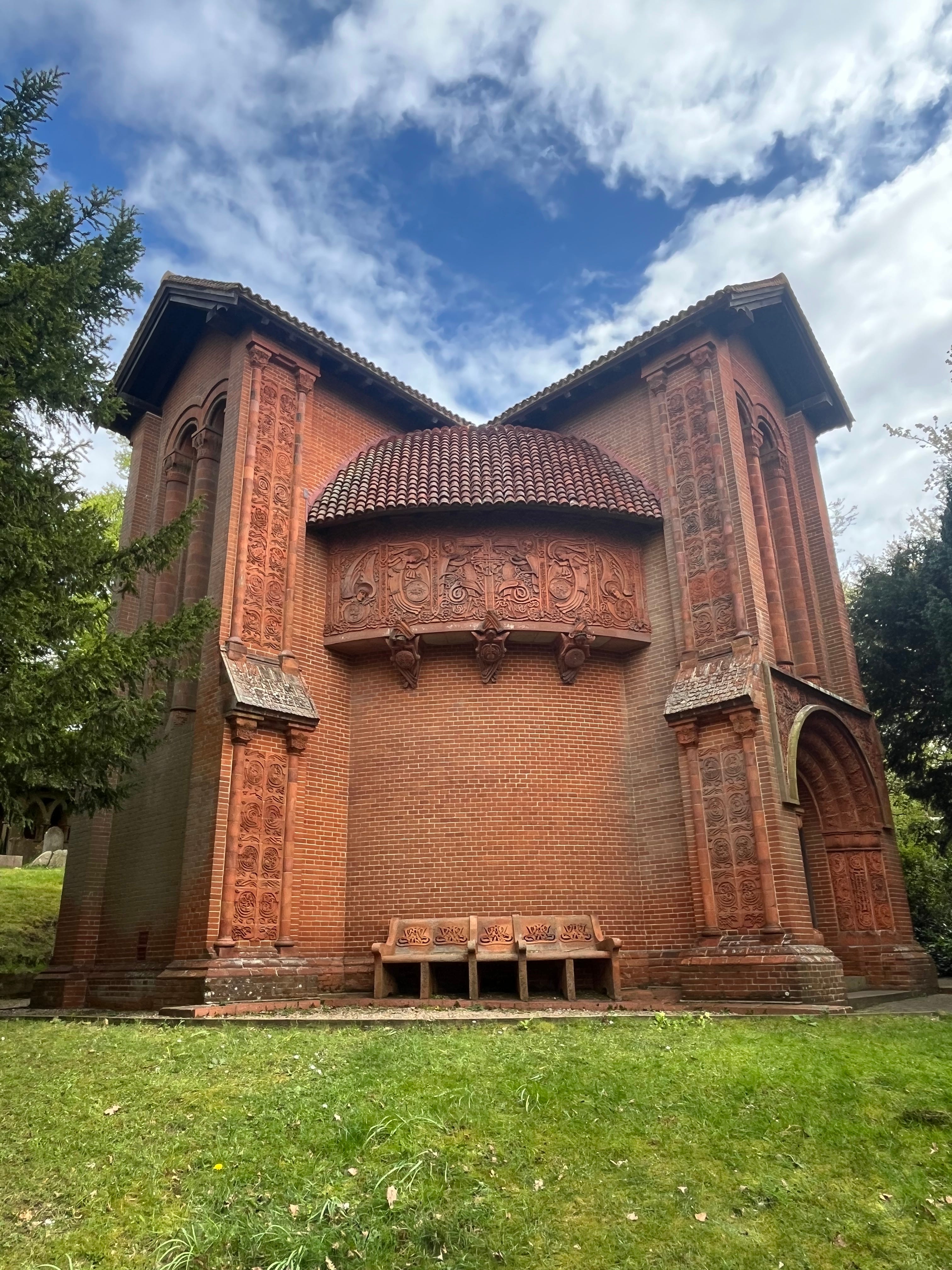


The Chapel was our favourite feature, a terracotta building with an extraordinary interior designed by Mary Watts and over 70 local people, featuring Romanesque, Celtic, and Art Nouveau influences. It’s absolutely stunning and a place where I would be delighted to spend eternity. Typically, the inscription reads ‘Designed by Mrs Watts, wife of GF Watts’, without even giving her first name. Judging by the chapel alone, I’d say she was more talented than her husband.
Watts seems to have been an odd character. He was 30 years older than the 17-year-old Ellen Terry (apparently he’d wanted to adopt her but she was too old for that…) and then didn’t get married again for over 20 years when he met Mary, who was also about 30 his junior. It really makes you wonder. I expect he had a lot more in common with Mary than he did with Ellen and I hope that they were compatible (in a companionate sort of way, I imagine) – and that she enjoyed her 34 years of widowhood.
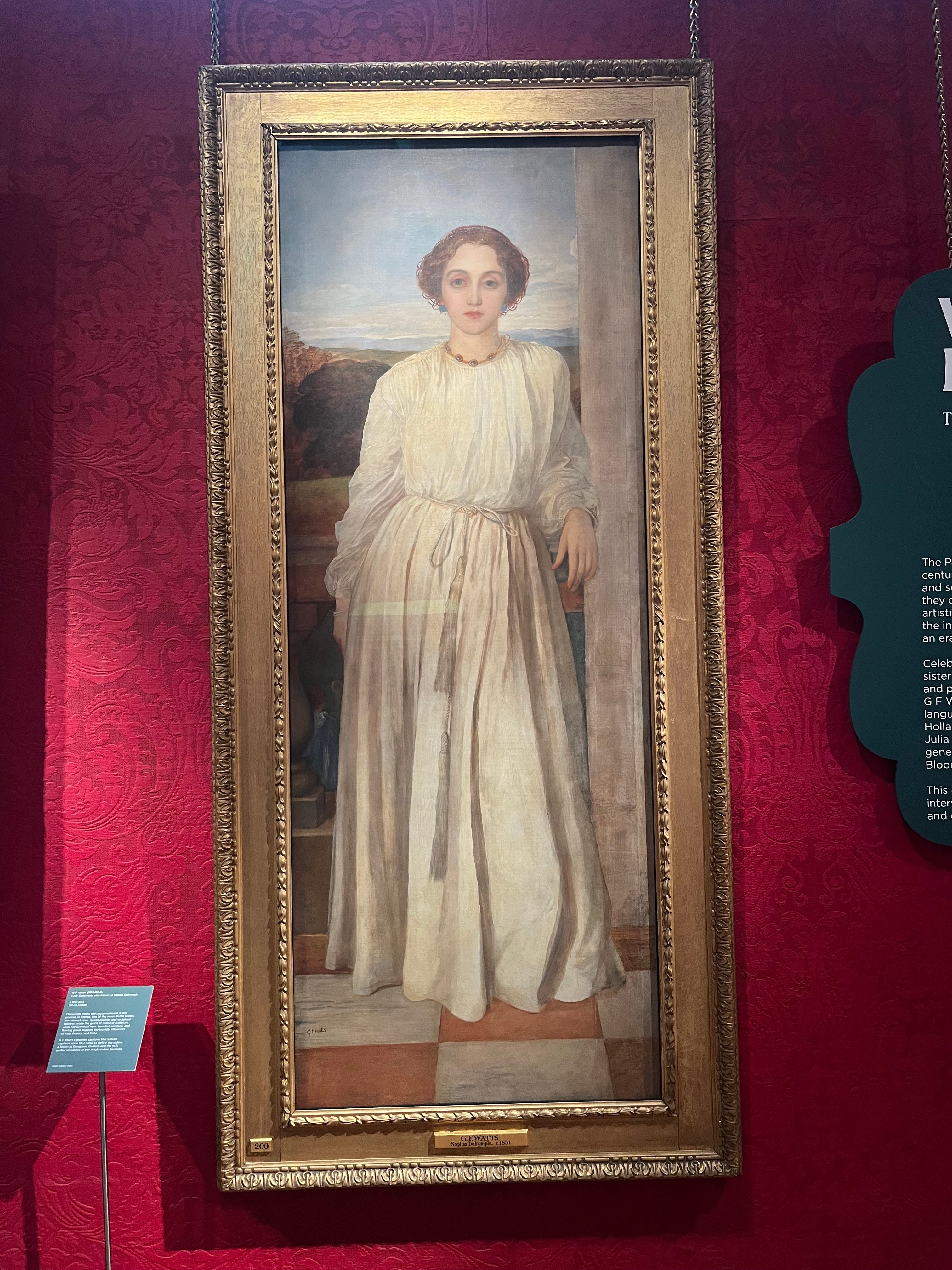


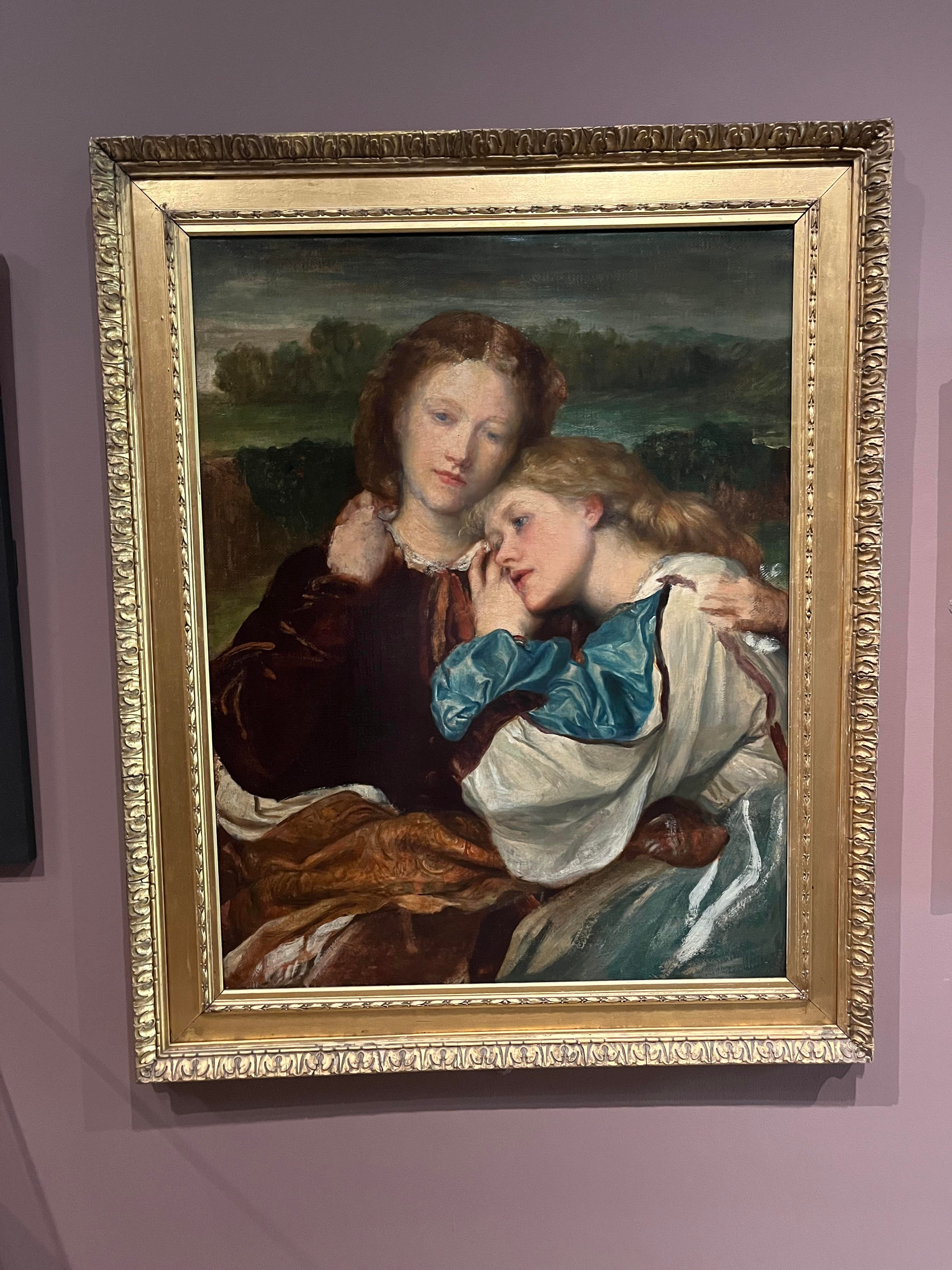
Anyway, the exhibition on the Anglo-Indian (by way of Versailles) Pattle sisters and their descendants was excellent (it’s just finished, I’m afraid). Thy included the photographer Julia Margaret Cameron; Little Holland House hostess Sara Prinsep, and Maria Jackson, who became the grandmother of Virginia Woolf and Vanessa Bell. All were connected with Watts and involved in the arts. It’s a shame there wasn’t a catalogue for the exhibition and I’m also surprised there hasn’t been a group biography of the sisters by someone who really knows the Victorians and India (they embodied the British Empire in their way) – I’d be very keen to read it.
And how was Grace Pervades? Well, I gave what feels like quite a generous 3-star review. It’s very exposition heavy and has the rather painstaking feel of a historical TV drama from yesteryear. When it comes to theatre about theatre, I generally prefer the ‘Let’s put on a show in the barn’ approach that doesn’t take itself too seriously (Edward Gordon Craig would be appalled). I thought Miranda Raison was better than Ralph Fiennes but I kept thinking that I’d like to see Janie Dee play Terry in a more dynamic play. I don’t think anyone involved gives their best work, except possibly costume designer Fotini Dimou.
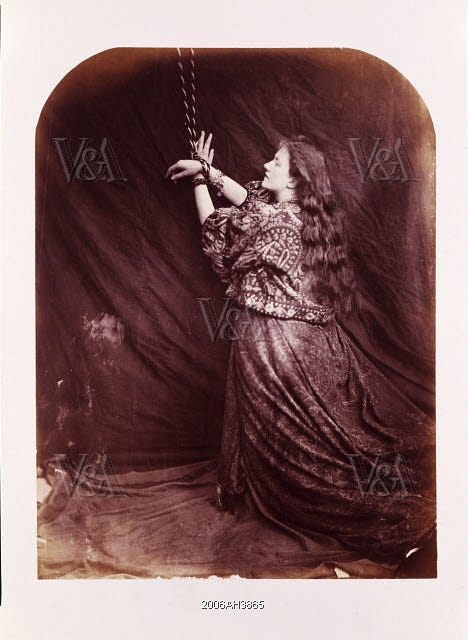
Possibly the thing that pleased me most was the way in which Ellen Terry’s elder sister Kate (Mrs Arthur Lewis) features as a character (played by Kathryn Wilder) and she isn’t depicted as a snob, as she’s sometimes (quite unfairly I think) been painted. I happen to be world expert on the scrapbook dedicated to Kate Terry’s life and career (and perhaps by default on Kate herself), which was the subject of my first and last academic article.1 The play does acknowledge that Kate paved the way for Ellen (‘My sister was the talented one’, she reflects), so I will give David Hare credit for that.
Even if you saw the play and your response was ‘Who cares?’, I’d nevertheless highly encourage a visit to Terry’s country home Smallhythe Place, where Dorothy and I had the happiest of visits some years ago and I long to go back (unfortunately, you really do need a car for it). You’ll emerge inspired, I promise.
Watching
I am not watching The Pitt because I am a wimp. I prefer the low stakes happenings of Ruth Jones’s Stella. The second series floundered a bit, but it did feature my beloved Joanna Riding as Big Alan’s (Steve Speirs is really excellent) horrible ex-wife Melissa, described by Di Botcher’s brilliantly acidic Auntie Brenda as ‘Hitler in a pencil skirt’. Series 3 was back on a more even keel, despite the absence of Elizabeth Berrington’s Paula.
I’m also thoroughly enjoying the campus comedy Rooster, in which a successful yet awkward thriller writer (Steve Carrell, at his most endearing) becomes writer in resistance at the leafy college where his daughter, who is going through a bad break up, teaches Art History. As with Stella, it features parents and children who actually like each other.
Reading
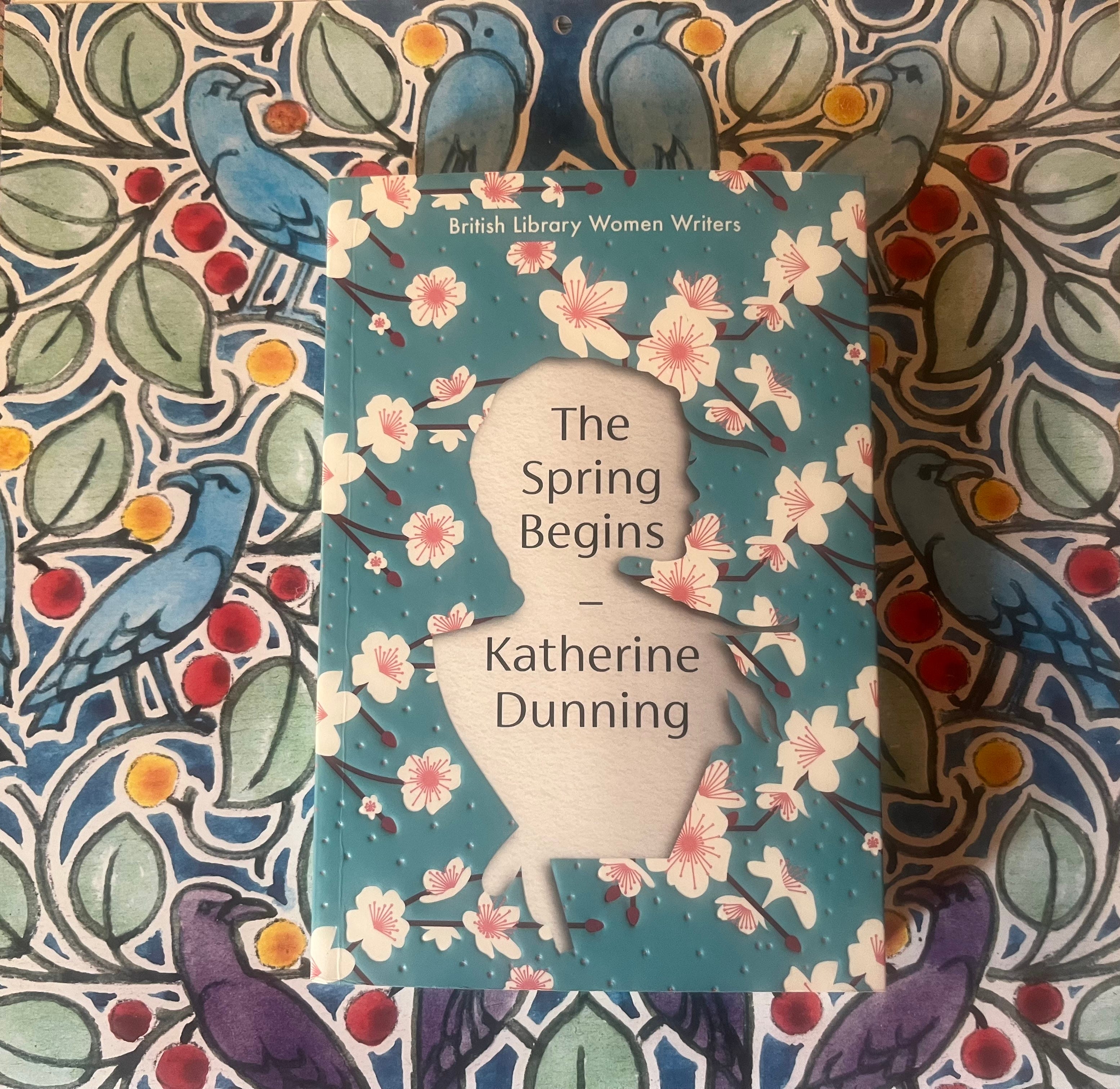
My favourite book of the month was The Spring Begins by Katherine Dunning (1934), published by the British Library Women Writers series, which is set in a large country house and told from the perspective of those below stairs. The protagonists are two female servants (a nursemaid and a kitchen maid) working in the house and a governess employed by the local vicar’s family. There’s also a Mellors-esque gardener lurking in the shrubberies. The governess, Hessie, is in her thirties; her sister is getting married, and she tries to convince herself that the completely indifferent curate is interested in her… it’s heartbreaking. Dunning isn’t DH Lawrence (thank goodness) but it is quite a bodily book. I’ve read most of the BLWW titles, and I’d put this in my top five.
The Emily’s Walking Book Club pick of the month was The Bottle Factory Outing by Beryl Bainbridge, which I wanted to like as there were elements that reminded me of Barbara Comyns and Celia Dale, but I didn’t enjoy it at all. I have a feeling Bainbridge isn’t for me. Since she seems to often be compared to Muriel Spark, I followed it up Memento Mori, which I thought suffered from too many characters and an insufficiently satisfying payoff. For what it’s worth, my favourite Spark title of the ones I’ve read to date is Loitering with Intent (it breaks my heart that there was never a film with Maggie ‘Miss Jean Brodie’ Smith as Lady Edwina – there are no cosy elderly people in her books).
Liza Minnelli’s memoir Kids, Wait Till You Here This!, written with her BFF Michael Feinstein, was a wild ride and very, very camp (she really hates Lady Gaga). It’s interesting how she continues to idolise her father and won’t say a word against him (shouldn’t he have intervened more when she was basically her mother’s carer and closest confidante from an early age?). I’ll always choose to listen to Judy Garland’s voice over Minnelli’s, but I do wish I could have seen her live in her prime.
I really enjoy Laura Wood’s Eva Ibbotson-esque novels (in fact, she’s writing a book about Ibbotson) and her Cinderella story A Single Thread of Moonlight, set in the 1890s in which the heroine is a brilliant seamstress, was excellent escapism. I couldn’t help imagining the cast of the latest series of Bridgerton as the characters and, as Ever After is my favourite Cinderella retelling (and one of my favourite films full stop), I do like the trope of one stepsister being secretly nice (God bless Jacqueline – Posy in Bridgerton was adorable, and Wood’s Cassie is a bicycle-riding New Woman).
Coming up next week
I’m revisiting 1536 just for fun (my interview with the three leading ladies can be found here); it’s my birthday on Tuesday; I have my first outdoor theatre show of the year with Sherlock Holmes at Regent’s Park Open Air Theatre, and then I’m off to Hebden Bridge for Haworth with my friend Sophie. I hope I’ll finish my Wuthering Heights reread before we go. I only have vague memories of how things work out with the younger generation. I just remember that it doesn’t end well.
‘The Scrapbook as an Archive: Collecting and Curating in the Kate Terry Scrapbook’, Theatre Notebook, Vol 27 No 1, 2021.